Dr. Cezary Kabała
Home Page
soil resources
- Soils of SW Poland
- Guidelines for soil description - student's version 2018
- Soils of Sorkapland (Spisbergen)
- Soils of the USA
- New England soil profiles
- Soils of Germany
- Soils of Germany + maps
- WRB excursion 2012 in Poland
soil science on-line
- World Reference Base (WRB)
- Polish Soil Classification
- Soil Taxonomy
- Project FACES
- Project SYStem
- Internet tutorial sites
society
- Polish Society of Soil Science
- Soil science and related departments in Poland
- IUSS
- ECSSS - Eurosoil
- Soil science in the world
local links
welcome!
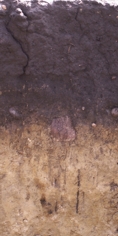
Soils sustain life [SSSA motto]
Soils contain nutrients released from bedrock or bio-accumulated, which are used by plants. Soils have the capacity to store water, which determines its availability to plants and regulates the outflow of water into the rivers. Soils have a sanitary- by the sorption or decay of the contaminants. The soils are home tomicro- and macro-organisms, which both make use of soil fertility, but on the other hand, are the engineof all biochemical processes such as weathering of rocks and minerals, organic matter decomposition, the cycling of carbon, nitrogen, sulfur, phosphorus, etc. The soils permanently transform, and with them are changingecosystems. Soils are natural resources whose protection is necessary for the sustainabledevelopment of human civilization function .So is anybody else surprised that so many people passionate about soil?
about me
I am a soil scientist. I hold my MSc (1993) and PhD (1997) in agriculture and soil science from the Wroclaw University of Agriculture (currently: Wroclaw University of Environmental and Life Sciences). I have several research interests, as everything associated with soil is interesting... »»»
about soils of sw poland
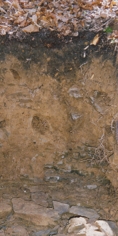
The soil variability in the Lower Silesia reflects the geological, topographical and climatic diversity of the region. Based on the classification of soil regions of Europe [BGR, 1998], three zones were distinguished: 18.4 - Cambisols - Luvisols (south), 52.2 - Luvisols - Gleysols (central part), and 50.1 - Podzols - Gleysols (north). »»»
kontakt
Dr. Cezary Kabała
Professor of Soil Science
Wroclaw University of Environmental and Life Sciences
Institute of Soil Science and Environmental Protection
50-357 Wroclaw, Plac Grunwaldzki square 24a, POLAND
phone (+48) 71-320-1943
e-mail1: cezary.kabala(at)up.wroc.pl,
e-mail2: cezary.kabala(at)upwr.edu.pl
Copyright © Cezary Kabała, Designed by Alpha Studio